Savings from LEDs depend on three things you can look up in a minute: how many watts you remove, how many hours the bulb runs, and what you pay per kilowatt-hour. Everything else is detail.
The formula
Annual savings = (old watts − new watts) ÷ 1,000 × hours per day × 365 × rate per kWh × number of bulbs.
Nothing in that formula is a guarantee. It is arithmetic on your inputs, so the accuracy of the result depends entirely on how honestly you estimate hours of use.
Worked examples
One 60W bulb replaced by a 9W LED, running 3 hours a day at $0.17/kWh, saves about $9.50 a year and 55.8 kWh.
Ten such bulbs at 4 hours a day at $0.17/kWh save roughly $126 a year and 745 kWh.
A 100W porch light replaced by a 15W LED running 8 hours a night at $0.20/kWh saves about $49.60 a year on its own.
What changes the answer most
Hours of use dominates. Doubling runtime doubles savings; halving the wattage gap barely moves it by comparison.
Your rate matters nearly as much. Households paying $0.30/kWh save close to twice what a household at $0.16/kWh saves from the identical swap.
- Prioritise high-hour fixtures: kitchen, living room, porch, hallway
- Check the rate on your latest bill rather than using a national average
- Count bulbs per fixture — a five-bulb chandelier is five swaps
FAQ
- How quickly does an LED bulb pay for itself?
- In a fixture running three or more hours a day, a typical bulb pays back its purchase price within a few months, then continues saving for the rest of its rated life.
Keep reading
Free guide
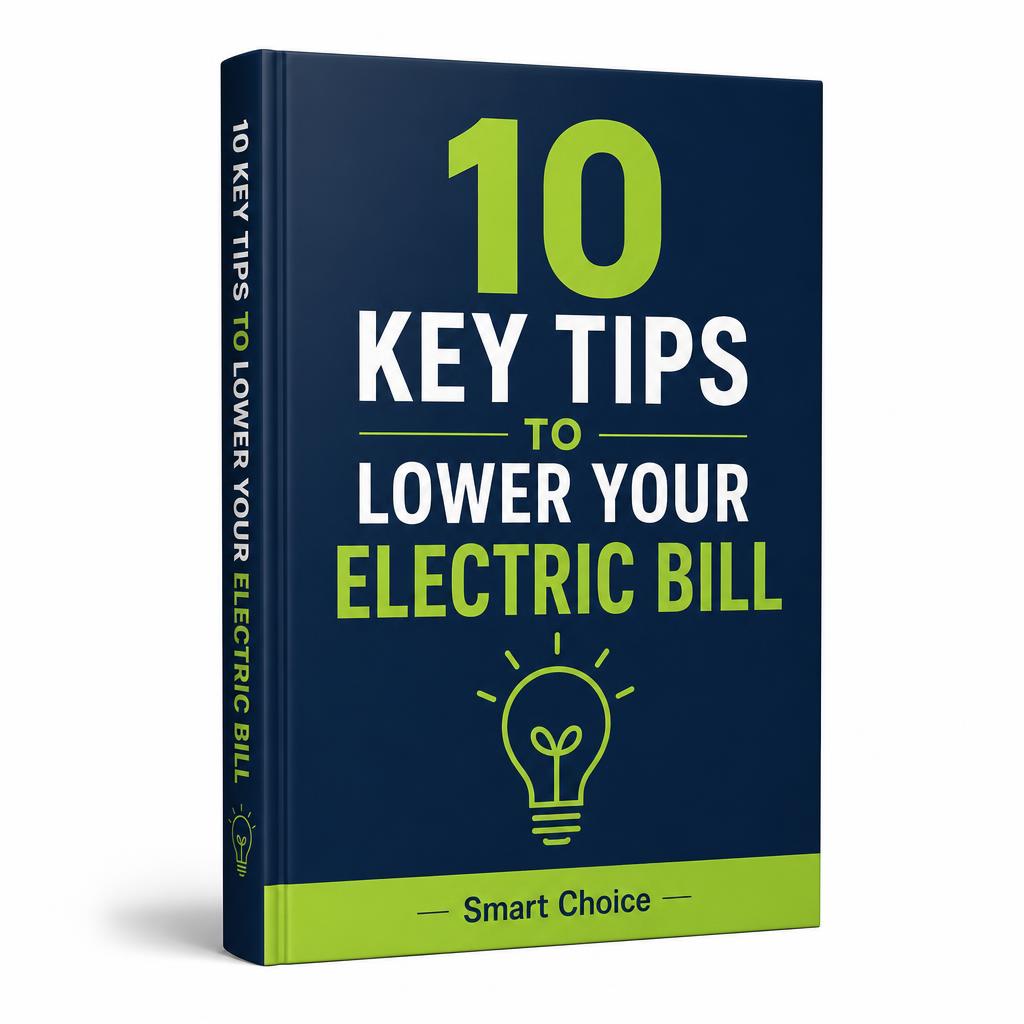
10 Key Tips to Lower Your Electric Bill
A short, practical PDF you can work through in a weekend. No fluff, no hype — just the changes that move a real electric bill.
- The 3 changes that cut the most kWh first
- A room-by-room LED swap checklist
- How to read your bill and spot the expensive habits
- Where phantom loads hide — and how to measure them