Watts measure cost, lumens measure light
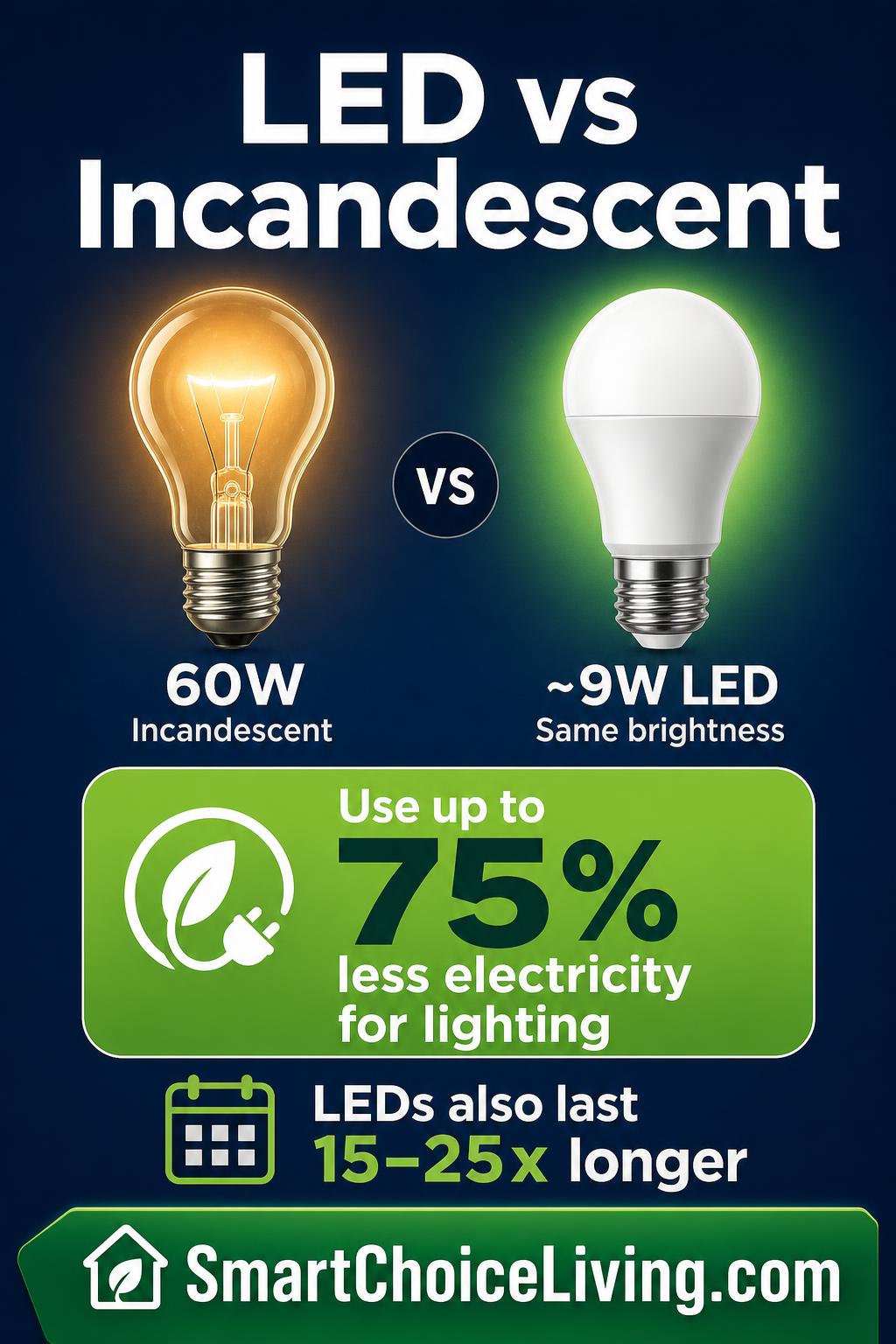
An incandescent bulb makes light by heating a filament until it glows, which means most of the energy leaves as heat. An LED converts a much larger share of its input into visible light. That is the entire story behind the numbers below.
When shopping, compare lumens for brightness and watts for running cost. A "60W equivalent" label refers to brightness, not consumption.
| Metric | Incandescent | Halogen | CFL | LED |
|---|---|---|---|---|
| Typical wattage | 60 W | 43 W | 14 W | 9 W |
| Light output | ~800 lm | ~800 lm | ~800 lm | ~800 lm |
| Efficacy | ~13 lm/W | ~19 lm/W | ~57 lm/W | ~89 lm/W |
| Rated life | 1,000 hrs | 2,000 hrs | 8,000 hrs | 15,000–25,000 hrs |
| Energy cost / yr (3 hrs/day @ $0.17) | $11.17 | $8.00 | $2.61 | $1.68 |
| Warm-up time | Instant | Instant | 30–90 sec | Instant |
| Dimmable | Yes | Yes | Only special models | Model dependent |
| Contains mercury | No | No | Yes — recycle | No |
| Heat output | Very high | High | Low | Low |
The cost formula
Annual kWh = watts ÷ 1,000 × hours per day × 365. Multiply by your rate per kWh for annual cost. A 60W bulb at 3 hours a day is 65.7 kWh — about $11.17 at $0.17/kWh. The 9W LED costs about $1.68.
When an incandescent still makes sense
Rarely, and mostly for niche fixtures: certain ovens and appliances, some decorative or dimmer-limited circuits, and very low-hour locations where the payback period stretches for years. Everywhere else, LED wins on cost, lifespan and heat.